-
40. Angry Parents
I wish this was not an aspect of our job but it totally is. When I was a young teacher and a parent showed up at school angry about something, I used to wonder what in the world I did to cause her to be angry. The first thing you need to know is that you are likely not part of the equation. That parent was angry before whatever happened that she was there to discuss. You are just the person in the path of the wrath. There are an awful lot of parents who feel helpless about situations in their own lives that they cannot control and the one thing they can control is their children. Therefore, all of that pent up anger gets spilled onto you because you are the surrogate for that parent six hours a day. That anger you are receiving is a result of their own internal struggle, not something you did. Don’t own someone else’s issues.
As a veteran teacher, I remember one incident where a child came to my class late. I said good morning to her and we continued without interruption. The parent, who was standing behind her, obviously ready to give me a reason for the tardiness, glared at me. Perhaps because I didn’t ask for a reason or because we promptly moved into what we were doing in the classroom without much interference. The parent walked off but turned around and came back because she wanted to confront me about how I greeted her child. She had a rather large set of keys in her hand that she was aggressively swinging for emphasis and I just stood there and listened to her rant. I did not act intimidated. I did not act concerned. I did not act like I was going to call campus police. The young teacher across the hall saw this exchange and got very nervous. She was worried that the mom was going to hit me with those keys. After it was over, she told me she was about to run to get help because she perceived that I was in real danger. She was me, early in my career. I explained to her that I knew that I had not done anything to provoke that tirade and when she didn’t get much attention from it, she promptly left. I am not saying that the situation couldn’t have turned volatile in an instant. My first approach is always to remain calm, and professional. Usually if you listen, and don’t try to defend or engage, it will end quickly. But, if you feel threatened or unsafe, don’t hesitate to take the conversation into a place more public than your classroom for your own protection. If you schedule a conference and you believe it could get volatile, be sure to ask a counselor or administrator to attend it with you. Sometimes a parent can try to bully a young teacher, capitalizing on your inexperience. There are people in that building to help you. Call on them.
Again, I want to remind you of the simple, but profound impact that using “Hook Ups” can have on any stressful or challenging situation with an unhappy parent. You can stand or sit in “Hook Ups” without the parent knowing what you are doing ( as I have done with many people over the past 30 years!!). In this relaxed, integrated position, you have the opportunity to access the formal reasoning in your frontal lobe so you can respond to the situation, instead of react to it. Oftentimes, when we “react” to a situation, we may say or do something that we regret later. Our PEC parents are on a journey with their child that they did not volunteer for or plan to be on. The stress in their life is real. As teachers, we want to support them, while taking care of ourselves.
Pamela Webster, M. Ed., SPED
-
39. The Pencil Sharpener
The pencil sharpener is a necessary beast in a classroom that requires as much management as five new students. If you don’t have a plan for your pencil sharpener, that one little machine will drive you over the edge of sanity. It doesn’t matter if your sharpener is a manual one that could be found in a 1956 classroom or you have a fabulous one that is the first cousin to a wood chipper, all varieties in between can create lost instructional time in your classroom. If your pencil sharpener is manual, it is the next best thing to a toy. If your pencil sharpener happens to be electric, it is even more fun to play with. It is also conveniently accessible so everybody who is tired of sitting, will start breaking pencil points for the opportunity to get up and move around. In addition, the incessant grinding of a pencil sharpener will disrupt your instruction all. day. long.
That pencil sharpener is a curiosity. You will have students who wonder how that thing works. They will sharpen 52 pencils down to the nub just observing the fresh point, and breaking it again to watch it again. You will have someone who wonders if that thing will sharpen crayons. You will have another who wonders what will happen if you insert the wrong end of the pencil into the sharpener. You will have even another who wants to sharpen every colored pencil in their pouch. If you don’t have a plan for the sharpener, it will take over your classroom.
It is my recommendation that sharpening pencils becomes someone’s job. Have a can full of sharpened pencils that students can trade if their pencil breaks. Have another can for broken pencils that need to be sharpened. At a designated time of the day, the helper in charge of pencils should go sharpen every pencil in the broken can. Students should use that same time to reclaim their pencils that they put in the broken can. Having only one student at a time with access to the sharpener will save instructional time as well as prolong the life of your pencil sharpener.
It is barely worth noting that if your pencil sharpener gets jammed or otherwise destroyed during the year, it is likely that it will be next year before it gets replaced. Therefore if you create a plan, limiting access, you will be more likely to have as little disruption as possible that can be created by that one little necessary, aggravating, overworked, often abused, simple machine.
-
38. Acts of Service, Gifts of Giving.
When I taught in schools affected by poverty, I became very sensitive to the situation, especially around the holidays. I would frequently provide Christmas gifts for students or families mostly because I could not enjoy my holiday knowing some of my students would have nothing. I was about halfway through my career when I had an epiphany about providing for students in poverty; they often are the recipients of gifts from charitable strangers, but they were very rarely given the opportunity to know the joy in giving. Children in poverty want to be able to give a gift just as much as you. They want to choose the gift, they want to wrap it and they want to present it to someone they love. I noticed when I gave a child the opportunity to choose a gift for a mother, sibling or grandmother, they experienced greater joy than when they got a book or a game for themselves. Because they didn’t have any money to purchase gifts, they were allowed to write down acts of kindness they had performed during a week and make the purchases with their own acts of service. Nobody pitied them. Nobody gave them anything. They earned it and they were extraordinarily happy to learn that their acts of kindness had real value that could be traded for gifts. The gifts were items people gave me or trinkets I got from the Dollar Tree. Once I asked parents to send in things they had received that they wanted to re-gift and I was the first one surprised by the amount of candles, bubble bath, body lotion, scarves, socks, oven mitts I received for free. The value did not really matter. It was the experience of earning and giving that brought the students affected by poverty the most joy. They wrapped their gifts, tagged them and happily took them home.
How often is it that we can purchase something with acts of kindness? For the students in my class, they became acutely aware of the value of being kind, holding a door for someone, playing with a lonely friend, including someone who has been excluded. That list they are making has real value and it makes them aware of opportunities to do the right thing. Of COURSE they wanted a long list so they could spend more. Those who had really long lists drove up the prices of the products. At the end of the activity, I realized there was more joy in facilitating an opportunity for them to be able to give to someone they loved, than in receiving a toy off their own wish list.
I always had gifts left over so I could easily repeat this at Mother’s Day or for someone’s birthday.
-
37. Teach Vocabulary
You are fully aware that building vocabulary is a critical aspect of developing literacy but the way many teachers go about teaching it is terribly outdated and ineffective. Flash cards are ineffective. Memorization is useless. Matching tests and fill-in-the-blanks are weak assessments of vocabulary. The best measure of whether or not students have integrated new vocabulary into their schema is by using the word in classroom conversation. I always had some type of reward (like bonus points or even a piece of candy) that I awarded when someone used one of the vocabulary words correctly in a sentence. Always have all of the new words displayed in the classroom. As the year goes on, the list will grow. The reward is good for any word, not just the ones from this week. Soon, the students begin trying to figure out a way to answer in a way that uses one of our vocabulary words.
Consider writing a sentence on the board with the vocabulary word underlined and ask the students to try and figure out the meaning of the word using the context clue. For some reason, they like that much more than looking up the definition in the dictionary and writing it down to memorize. Allow students to play vocabulary charades or pictionary where they try to act out or illustrate the words. They have to know what the word means to do either. One of the best ways is to divide the words among the students at each table group and make each student in charge of teaching 3 words to the other students. They have to introduce the word, talk about its meaning, use it in a sentence, and determine if the others understand the meaning. After they have all “learned” the new words and their meanings, then you can play games like Charades or Pictionary to demonstrate their knowledge. This engages every student and facilitates the integration of the new words into their existing schema.
One strategy I have used successfully in teaching vocabulary over the years with PEC students is to introduce the word, and then have them write it, say it and spell it out in a sand tray or in shaving cream . This is a kinesthetic, auditory, visual and tactile approach to learning. I then use the new word in a simple sentence and ask them to do the same. Many times, they will use my sentence on the first attempt, which is fine. They want to be safe and give you the correct answer. Give a few more examples and then go to the next word. Before doing any of these activities, I have my students do “Thinking Caps”, a specific movement from the Brain Gym® menu of activities. Thinking Caps turn your ears on for hearing, listening and understanding what you hear. It is simple and very effective.
Pamela Webster, B.S., M.Ed., SPED
-
36. Timed Tests
Remember how much fun timed tests were when you were in school? Do you remember how much you loved hearing a timer tick-tick-tick while you attempted to write the answers to your math facts as quickly as possible? Of course not. Nobody loved it. Everybody remembers them but not for any good reason. Timed tests are no more effective than flash cards but do you know what is? Practice. How hard is it to get a child to play a game where you keep score? Not very hard. The objective of the timed test was to provide consistent practice and build fluency. Can’t that be accomplished with a game? One of the biggest beasts to conquer in the early grades is teaching children the multiplication facts. Most teachers make it some sort of game or competition. They put up a bulletin board and give children an opportunity to memorize a new set of facts daily. Once they repeat the facts to the teacher, she checks them off and adds to the display. Once every student has checked off all of the tables, they celebrate with a party. Do you know what they do then? They move on and start learning division. Multiplication is something that is memorized briefly but once the goal is met, it is not practiced, it is used in reverse to teach division. If you teach a grade that is learning multiplication or a grade that is supposed to already know how to multiply, practicing is the best way to spend four minutes of each math lesson. The thing that makes this game so effective is that you do it every single day. You give them an opportunity to multiply every day which means they will use the skill. Guess what? They will also be great at dividing! Don’t memorize and move on. You will be fighting that battle every day of the year if you do
.
Please use games, music and movement to teach whenever possible.
Timed tests are stressful for most students, especially our PEC students. Learning is usually stressful enough for them. Get creative and have fun! That’s a win-win for everyone!
*Play Schoolhouse Rock Multiplication songs during morning entry and afternoon dismissal. Music activates memory. Think about how many songs you know by heart compared to how many math formulas you “learned” in high school but never used again. Multiplication is arguably one of the math skills that is used daily throughout life. Take the two minutes at the beginning and end of class to invest in making the facts permanent. These games are pinned to the Pinterest page.
There are very few PEC students who benefit from “timed tests” of any kind. Typically, this format causes unnecessary stress and anxiety, which puts the student into a “fight or flight” state, where he is just trying to survive. In this place, no learning is possible. The student cannot access the frontal lobe of the brain where all new learning is stored, because they are still stuck in survival. Musical CD’s that teach math facts can be helpful to our students on an individual basis, usually with headphones. When our granddaughter was 4 or 5 years old and was learning to ride her bike, I reminded her that.. ”Practice makes perfect!”… and she said ..” No, practice makes progress.” Out of the mouth of babes.
Pamela Webster, M. Ed., SPED
-
35. Reprimand in Private
In the event a behavior is so egregious that you need to reprimand the child, do it privately. Begin by apologizing to the twenty two others whose lesson was just interrupted and ask the child to step outside the classroom. The other students will remain quiet while you are in the hall because they want to hear justice being served, even if it is none of their business. Speak firmly, but professionally and never lose eye contact. Speak to the child as if the parent was standing right there. Sometimes the child needs some time to cool off and regain composure and sometimes you do. Go ahead and get a plan of what you will do before you need it. Many teachers work out with another teacher on the same grade level or across the hall to take each other’s children for a few minutes to cool off when the need arises. Usually time will help diffuse the situation but when the child returns to your classroom, be sure to articulate that you have both cooled off and he can anticipate a new chance to improve his behavior.
Just as you reprimand in private, be sure to praise in public. Do it to other teachers, adults or even the children in your class. Everyone likes for someone to notice when she is doing the right thing.
Public reprimand of a child is very seldom appropriate. I almost always use a Brain Gym® sitting/standing position called “Hook Ups,” before talking to a student about an inappropriate behavior. My students are all familiar with this technique and know that we will not begin to talk about the situation until we have both had some water (to hydrate after the dehydration that the stressful situation has caused) and have sat in “Hook Ups” for a few minutes. De-escalation is so much more effective than trying to combat an unacceptable behavior. If you are unfamiliar with this valuable technique, please ask a coworker who has taken a workshop from me, or call me, and I will help you.
“Hook Ups” provides the student (and teacher!) the opportunity to relax and integrate themselves in a way that they are better able to express their frustration, needs and/or concerns. I have many amazing stories to share about the profound impact using “Hook Ups” has made in the lives of learners of all ages.
Pamela Webster, M. Ed., SPED

Brain Gym hook ups -
34. “Tell Your Mama I said…..”
Be very aware that children are going to tell their mamas everything you say, but I have a circumstance when I lead with “Tell your mama I said….” When a child shows me respect or especially good manners, I say, “Tell your mama I said you’ve got really good manners. Mamas like to know that what they have taught you is being used when she’s not around.” When they are processing the “tell your mama I said” part, their eyebrows furrow and they look concerned, until I get to the part about the good manners. His face lights up and you can believe that is the first thing he will tell his mama when he gets in the car. Further, you will notice other children responding politely so you will say the same thing to them. They all want the teacher to brag on them and manners is a really easy way to achieve that. They may not pass the test academically, or meet the targets but they can be polite and you will find that they will respect you and show you manners to get you to say that to them.
When a child does or says something completely inappropriate, act surprised, and take pretend ownership for the inappropriate behavior. Especially when other children gasp and look at you with wide eyes like they can’t wait to see what is going to happen to him. I would usually say, “Boys and girls, you are surprised because what happened just now violated the only rule we have in this class. But, it’s not really Sherman’s fault. You don’t realize it but someone invested in you and taught you what was appropriate to say (or do) out in public. Nobody has taught him yet. Let’s bring him up to the same level where we are. Sherman, we all believe that if you knew better, you would do better. What you just did was not acceptable in our classroom and none of us deserved that. You need to first issue an apology to all of us and then convince us that you now know what is acceptable behavior and tell us what to expect from you going forward. “ You have just transferred the accusation from the student (and the parent or previous teachers etc.) to “someone.” You give the other children ownership in the justice they are seeking. You require the child to issue an appropriate apology and to basically teach us what to expect from him going forward.
Bragging to Mom that the teacher said you had really good home training is not a typical experience for many of our PEC students. Typically, our PEC students are unaware of the “hidden curriculum” that exists in every classroom among neurotypical peers. This refers to things you learned from your environment but were not directly taught. Many of our PEC students just don’t “pick up” on social cues that indicate what is accepted and what is not by observing facial expressions. This can have an impact on their social interactions with their peers in the general education classroom. As teachers, it’s our job to support our PEC students by teaching them aspects of the “hidden curriculum” that they struggle with. We need to teach and model how to behave in certain situations.
Pamela Webster, M. Ed., SPED
-
32. Recess is Necessary
No matter how hot or cold or windy it is, you will take those children outside, not just for them but for you! Little kids have an enviable amount of energy that needs to be burned off outside. You can bundle up when it is cold, sit in the shade when it is hot but you can’t go outside when it rains. Don’t expect children to sit quietly and read or watch a video when it is a rainy day. Plan ahead for some rainy day activities that you can do with your students that they will enjoy enough to replace recess. Consider creating an indoor recess cart filled with games the children enjoy playing. Be sure to focus on games that promote movement since it will be replacing their outdoor time.
Consider using your technology to increase exercise. GONOODLE and YouTube are sites where you can get dance, movement and yoga for kids. Divide the class in half and play balloon volleyball. Fold some origami. Set up an art center for kids to create. Toss silk scarves. Play Simon Says. Build with Lego’s. Play board games. Play Twister using math facts. Introduce your students to games from your childhood like jacks. Turtle Tag, or hopscotch. Play Jenga or checkers or chess.
Many classrooms are operated with a behavior management system that takes away minutes of recess for breaking rules. Children are going to break rules. They are going to suffer consequences and they are going to learn from it. However, there are some children who, if their recess time depended on following all the rules, they would never go outside. The children who have the most trouble sitting still seem to be the ones who spend the most time standing along the fence watching others play. There is substantial research to suggest that the academic level of a learner is directly related to his or her activity level. When developing consequences for unacceptable behaviors, consider techniques that you can implement outside during recess that also movement. Some teachers use “walking tickets” which are slips of paper the student is given to indicate how many laps around the playground are required. You might also have students wipe down slides and playground equipment. You could also make a list of motor skills or sensory activities that the student must do before free playing. Reduce screen time rather than activity time. Try to focus on the value of movement for the child who can barely sit still instead of looking at recess as an earnable reward or free play.
Dr. Carla Hannaford, Ph.D., states in her book, “SMART MOVES… Why Learning Is Not All In Your Head”..”movement activates the neural wiring throughout the body, making the whole body the instrument of learning.” In schools today, there seems to be less time and opportunity for children to just play . If recess is not a possibility, then go on a walk-about. You can have a scavenger hunt and give them a list of things to find while walking (inside or outside). Teach them how to skip and then cross crawl skip all over the building…. Inside and out. Draw large Lazy 8 designs on the outside sidewalks and have the children walk slowly, quietly and intentionally on them..
Please never take recess away as a punishment for a child. Movement, especially whole body integrated movement, is necessary to support all areas of learning. Dr. Carla Hannaford has taught us that movement, through the motor cortex, is very much a part of verbal expression. The neural connections between the motor cortex and the formal reasoning area of the frontal lobe support the connection of movement to thought processing. Whole body integrated movement activates the neural wiring throughout the body, making learning easier, less stressful and more joyful. The whole body becomes an instrument of learning.
Please let children play.
Ashley Montagu, a British-American anthropologist, shares the following thoughts about play…. “ In the early formative years, play is almost synonymous with life. It is second only to being nourished, protected and loved. It is the basic ingredient of physical, intellectual, social and emotional growth.”
Pamela Webster, M. Ed., SPED
-
33. Beware of Full Moons and Holidays
There is a substantial amount of teacher lore that suggests that there is a correlation between classroom behavior and full moons. While there is no scientific evidence to suggest that the lunar schedule impacts the behavior of school children, the researchers are not likely classroom teachers. Almost all teachers can offer anecdotal evidence that the gravitational pull that can control the oceans can certainly interfere with the cognitive and behavioral patterns of young learners. Whether or not you believe in the lunar effect on classrooms, Emergency Rooms and police precincts, you should be prepared for some days that seem as if the planets are out of order. Children who are usually compliant are “off the chain.” Unforeseen emergencies seem to crop up every fifteen minutes. Somebody gets injured on the playground. Your math lesson was a flop. The principal just called a Code Orange and you have no idea what a Code Orange is. If this characterizes your classroom and there happens to be a full moon, draw your own conclusions. But, you should know that some days are just like that. Sometimes the best made plans fail to work. In situations like that; pause, then restart with a new focus. There is really no interest in a reason (lunar cycle or otherwise) for things not going according to plan.
As you approach holidays, especially ones that involve sugar or candy, I can assure you that sugar can affect student behavior. All holiday parties are at the end of the day for a reason. The whole week before Christmas, teachers often have a fun activity that they hold over the students as a carrot to get them to concentrate on school work in order to enjoy the art activity near the end of the day.
As a new teacher, I braced myself for Halloween and Valentines Day because they involved candy and chocolate, but I didn’t even plan on the day AFTER each of those holidays. The students were so sugared up the following day that I was already behind before the day even started. The best way to prevent your own frustration is to understand that those days leading up to holidays (and often the days after) need to be modified from your original schedule. Plan movement, art, or music that children want to get to do that will happen as a result of their cooperation. In the early grades, we celebrate everything from Dr. Seuss’ birthday to the 100th day of school in addition to all of the other standard holiday celebrations. Those special events contribute to the children viewing school as a happy place to come. Embrace those celebrations…and save the sugar for the last thing in the day!
Again, I stress the importance of recess and play, as well as extra attention to hydration, especially on these “:special celebration “ days and the full moon. It’s critical for the mental and emotional health of everyone.
Pamela Webster, M. Ed., SPED
-
31. Sub Plans
Regardless of how healthy you ordinarily are, children are germy and they transfer those germs to you every time they love on you. Your first couple of years you will probably catch a few more colds than is customary. You have got to be prepared to be absent with little notice. Yes, it is absolutely more trouble to be absent than it is to just go to school but if you go when you are legitimately sick, you will just perpetuate the sickness in your class. Most teachers have a “Sub Tub” or a notebook with lots of information to leave for a substitute teacher. Some subs come in with the goal of keeping everyone alive and relatively quiet until the end of the day while others will teach your lessons, give tests, grade them and leave you an itemized list of everything every child in your class did that day. Go ahead and make enough copies of work students should be able to do in class. You need at least three days worth but ideally, you should have a week’s worth. Have different folders in the sub tub for different subjects so that the sub will be able to easily access the practice work. Include a class roster including a list of trustworthy students to ask if the sub wants to know where something is or how you do certain things. Include your daily schedule and list a neighboring teacher who will be able to help the sub if needed. Include a seating chart, classroom jobs, class routines and procedures, and an overview of your behavior management system. If your absence is planned, leave a note for the guest teacher written on the board so the children can see it. Suggest that if the students show her respect and cooperation x number of times that day, they will earn extra minutes of recess when you return.
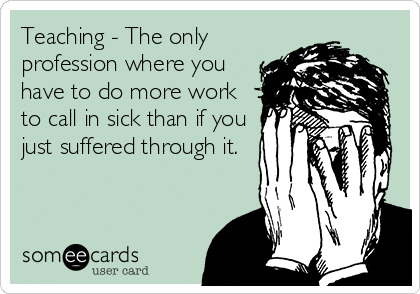
I can’t stress how important it is for you to have lesson plans prepared for your PEC students, well in advance, for your planned or unexpected absence. This folder should include , but not limited to, a general overview of behavioral/emotional/social/academic concerns for each PEC student. In a typical Inclusion classroom, our PEC students follow the grade level curriculum of their classmates, with accommodations as needed ( this will be written in detail in each student’s IEP). I also kept a list of specific substitute teachers who worked well with our students and understood their individual needs.
In addition, before I asked them if they would be on my substitute list, I invited them into our classroom to spend some time getting to know our PEC students and their routine, as well as the classroom routine.
Remember, most of our PEC students find “change” difficult on many levels. Their day will go much smoother if the teacher taking your place is a friendly face that they have already had a positive encounter with.
Pamela Webster, M. Ed., SPED


-
Subscribe
Subscribed
Have a WordPress.com account? Log in now.

