-
10. Be Flexible
Blessed are the flexible, for they will not be bent out of shape. Schools, administrators and teachers all love a good schedule. In fact, you can walk in almost any building and find posted outside every classroom door a carefully planned master matrix of a schedule including the time and duration of every subject, lunch, restroom and recess breaks. That is great in a perfect world but I have never seen a school that operated on a perfect schedule. Interruptions are standard. You cannot schedule someone throwing up, a water leak in the back of the classroom, someone unexpectedly pulling the fire alarm, or a hamster funeral. I used to have a standard disclaimer at the bottom of all schedules, syllabi, and lesson plans that read, “subject to change just because this is a school and stuff happens.” I’m not sure that prevented any consequences for knocking the planets out of orbit because we were three minutes late to the lunchroom but somehow it gave me comfort. I told myself that I was going to do the very best I could every single day for those children. The goal was the schedule, but I refused to let all of the million things that can happen in a day create additional angst for me. There were enough things that could cause me to become anxious not to add to it the angst of the mastery of the schedule. Give yourself, and your schedule a break. Strive every day to hit every mark on the schedule but when it doesn’t happen, tell yourself that you prioritized something else.

Children thrive on a schedule and with a routine. They love to know what’s next! Most elementary school students can tell you their daily/weekly schedule from memory! PEC students often need more concrete reminders. Sometimes I tape a small (laminated) schedule to the top right hand corner of their desk. Many of my PEC students over the years have had what I call “a high need for certainty”. In other words, they would ask the same questions over and over, just to be “certain”. They felt most supported when this was clear and there were no surprises. However, if a student comes into the classroom with concerns or issues from home, from lunch, from P.E. or just walking down the hall, I have learned that the best thing to do is to listen to them, address it, if you can, and be fully present for their concerns. The student may miss part of a math or reading lesson, but you will have given them a safe place to explore their feelings, and be heard, even if the problem wasn’t completely solved.
Pamela Webster, M. Ed. SPED
If you are an experienced teacher with a story to share about the gravity of flexibility in a classroom, please share in the comments below.
-
9. Be Organized.
Be organized. This is hardest for the creative teachers in the building.
This is not a real challenge for most people who grow up to become teachers. Their brains are organized and they appreciate calendars, planners and to-do lists. They love a roster and a book with lots of boxes to check off. They thrive in an environment that appreciates things color coded and alphabetized and separated by genre. If that does not describe you, then you are probably valued for your creativity. You will probably be the gypsy teacher; one everyone goes to when they need a zip tie, file folder labels, clothes pins, glitter, popsicle sticks, yarn, felt, hot glue sticks. These things are probably not organized by color but stuffed in boxes and piled in a cabinet behind closed doors, but you can find it within a couple of minutes. Those teachers with an alphabetized classroom library and tackle box with every type of paper fastener in an individual drawer labeled with cute labels need you for your ideas and your stuff. Maybe they can help you with forms and documents that help you become equally as organized. Like many professions, teaching has become more and more dependent on computers but those machines cannot replace the human element so much of our data collection and record keeping begins on paper and then is electronically entered. Be organized with data, grades and certainly attendance. Attendance is critical because it is tied to money allotted to each school. For many teachers, by the time the students come in the classroom and get settled, she forgets to send in the attendance. Then the secretary calls your room to remind you for the umpteenth time to turn. In. Your. Stinking. Attendance! The secretary is probably keeping a database of every time she has to call your room for your attendance so just make yourself a morning checklist and tell the student in your classroom who most wants your job to remind you every morning to do it!

Another reason to be organized is that you are modeling that characteristic for your students. You will have a child whose desk is perpetually overflowing with papers and books, but never the one that he needs at the moment. How he keeps his desk and his backpack reflect how his room likely looks at home. In those cases, it is important that you give a little more attention to a student who needs to learn to organize his binder and all of his supplies so that he can find what he needs in a timely manner.
If you are an experienced teacher with organizational tips, please share them in the comments below.
-
8. Teach Children to Genuinely Apologize.
Dozens of times each day, one child you love will offend another child you love with words or actions. Sometimes teachers feel more like referees than educators. If you tell a child to apologize, the perpetrator will turn toward the complainant and bark, “SORRY,” and turn away with a scowl and go tell a friend how she has been disgraced by a tattletale. As adults, we don’t think that someone barking “sorry” at us is sufficient and children don’t either. As an important part of the classroom routines and procedures, spend some time teaching children how to offer a genuine apology. It should sound something like this.
Name of the person I hurt,
I’m sorry for _________________.
I should have __________________ or I am not usually that rude.
(It was an accident. I should be more careful.)
Will you forgive me?
“Mary, I’m sorry for hurting your feelings by saying that you have a babyish backpack. I am usually not that rude. Will you forgive me?” or
“Brett, I’m sorry for tripping you when you were walking down the aisle. It was an accident. I should be more careful. Will you forgive me?”
Children need to learn to offer apologies when they hurt another student whether it was accidental or on purpose. Sometimes younger children believe that an accident absolves them of the responsibility to apologize but it does not. When another student has been injured or offended, they need to learn to take responsibility and articulate that they want forgiveness.
“Meredith, I’m sorry I said you can’t play with Janie and me. I should let everyone play who wants to. Will you forgive me?
The need for apologies frequently happens on the playground. If you don’t have to help navigate at least one genuine apology per day on the playground, you probably are not watching your class closely enough. After the apology, send those two or three off to play together or they will be right back needing another apology.
This may take some time with our PEC students, but with role playing and modeling appropriate behaviors and responses, they will get it if you are consistent with your expectations. This will definitely take up more of your time in the beginning, especially on the playground, but the long term benefits will be worth it.
Pamela Webster, M. Ed., SPED
If you are an experienced teacher with a story about apologies, please share it in the comments below.
-
7. One Rule. Do the Right Thing.
In most every classroom there is a prominently displayed list of rules. Some were created by the class while others were laws laid down by the teacher. It doesn’t really matter who contributed the content, they all involve a whole bunch of “don’ts” in regard to raising your hand to speak, leaving the room, doing your homework, cleaning up around your desk, keeping hands, feet and other objects to yourself etc. With thirty years of classroom experience, I am confident that I could create a list of at least a hundred rules about very specific things that happen in a classroom that I failed to include in my list of prohibitions. Somewhere about halfway in my career, my list was so long that nobody even read the stupid poster. I boiled everything down to one rule; DO THE RIGHT THING. I have plenty of expectations and the students know those but if someone blurts out an answer, I ask, “is that the right thing?” If someone says something rude to another student, I ask, “is that the right thing?” If someone keeps dropping a pencil so as to disturb the class, I ask, “is that the right thing?” No matter if you teach Pre-K or high school, this single rule works. Why? They already know. The younger they are, the more they are aware of right and wrong and justice. Everything is black and white. They have to develop reasoning skills before everything becomes gray and subject to argument. Since nothing else about teaching the earliest learners is simple, just take it. One rule is easy….and effective.
This may take some role playing and modeling appropriate behaviors for our PEC students, but they will get it if you are consistent with your expectations.
Pamela Webster, M. Ed., SPED
If you are an experienced teacher and you have a story about classroom rules, please share it in the comments below.
-
6. Love Your Students
Love starts with respect. Most people who grow up to be teachers loved school when they were young. They loved their teachers, they loved learning, they were often successful students and they respected the teacher and the rules. School was a great place for them. Because they respected adults, they entered the teaching profession believing that all children would respect adults just by virtue of their age and position. Regrettably, that is not the situation for every child. Children come to school and bond with those who have the most in common with the ones they respect outside of school. What happens if you don’t share the same race, gender, socioeconomic status, religion, or culture? You have to be the one to initiate and cultivate the relationship. I’m not going to tell you it is easy. I am also not suggesting that you will be successful the first time or just because you tried. For some, it will be a mountain that you climb every single day that school year but it will be worth it. The reward may not come before the end of the school year but fifteen years later when you get a graduation announcement, or a wedding invitation, or a surprise letter in the mail. You will never earn greater dividends than when you invest in children so every day that you leave the school thinking you did not make a difference, know that your “payday” will come much later. Young children are more perceptive than we give them credit for. They can read body language, facial expression, and attitude before they are literate. They determine how you feel about them before they decide how they feel about you. Everything speaks.
PEC students often don’t “love” themselves. They have not been successful in school, they may have been made fun of, they may have been bullied or picked on, and, more likely than not, there is no one in their life who genuinely listens to them. When I was a K and 1st grade Inclusion teacher, on Mondays and days we returned back to school after a break, we used to build time into the beginning of the day for students to “share”. They always had SO much to say that to jump right into academics would have been not only a waste of time, but would have invalidated that they were important enough to listen to.
We also realized that many of our students did not have anyone who “actively” listened to them….. about anything. Being fully present with a child, and actively listening to their thoughts, concerns, joys and disappointments, builds relationships, which can lead to establishing a partnership built on love and respect.
Pamela Webster, M. Ed. SPED
If you are an experienced teacher with a story to share, be sure to add it in the comments below.
-
5. The Teacher Hasn’t Taught Until the Student has Learned.
One of the biggest lies a teacher tells herself when her students don’t perform well on an assessment is that she taught the content. What she did was a lot of talking about it, and a few volunteers accurately responded to her questions, so she believed the class was ready to test. You can talk, sing, dance, perform, skip and hop while talking about the associative property, but unless a student can demonstrate that he understands the associative property, you haven’t taught a thing. The teacher hasn’t taught until the student has learned. Formative assessment was developed to prevent this very thing. Make it work for you. Randomize calling on students to answer rather than only volunteers (who likely are confident that they know the answer). The most valuable formative assessment is one in which every student must give an answer. The teacher then can identify exactly who knows, understands and can do what is required. Being surprised by how your students perform on an assessment is going to happen to you a number of times before you retire so don’t make it a cause to hate on yourself. Just remain cognizant that you need to teach it again (and assess it again). Giving yourself a fresh start everyday is just as valuable as giving it to your students.
You have been taught that we all have different learning styles. Before this was common knowledge, most teachers taught the way that they learned best, which may not have benefitted some of their students. In addition, we now know that understanding your “ Brain Dominance Profile”, can drastically improve your learning ( “ The Dominance Factor: How Knowing Your Dominant Eye, Ear, Brain, Hand & Foot Can Improve Your Learning”, by Carla Hannaford, Ph.D. ©1997) .
“The teacher hasn’t taught until the student has learned.”……Think about how many different learning profiles there are in your classroom, and how you can best support them. If you are unsure about how to begin, ask your PEC teacher for help.
Pamela Webster, M.Ed. SPED
Experienced Teachers- If you have a story that supports this topic, please add it in the comments below.
-
4. Call Every Parent the First Two Weeks of School
Start calling home about the third day of school. That gives you time to learn some very specific things about your students. The first call home should always be for good news. Tell the parent every good thing you can think of about her child. Go ahead and move your challenging children to the front of the list. Those parents are typically familiar with calls home but not usually for a string of the good things you have observed. If every other teacher that child has had frequently called on the parent to help resolve issues, that parent will immediately embrace you as “the one who finally gets my child.” The parent will most likely sit down with that child and tell her all the good things you said about her which will set you up for cooperation from both the parent and the child. Also, be cognizant that every child in your class, regardless of how delightful or challenging, is the center of that parent’s universe. Privileged families don’t love their children more or less than families experiencing poverty. All of the families that support these children have issues and challenges; they just look very different. You are likely to easily recognize and identify with those children who come from families with values similar to your own, but be sure to recognize your own learning curve for the children who come from vastly different priorities.

Most PEC students have difficulty answering the question, “How was school today? What did you do?” A great way to keep communication open between you and the parents of the students that you serve is to take a few pictures of their child during the day doing a specific activity or simply playing/interacting with another classmate. This gives the parent adequate information to begin the conversation. It also supports speech and language goals in articulation, as well as receptive and expressive language.
Pamela Webster, M.Ed. SPED
Experienced teachers, if you have a story that supports this topic, be sure to add it in the comments below!
-
3. Every Day is a Fresh Start.
This is very important. No child (or adult) needs to believe that they can make a mistake from which they can’t recover. A classroom is no place to hold a grudge. A classroom is a place for learning and learning happens with mistakes. When a child goes home for the day, you no longer have any influence over what happens in his day. For some, leaving your room is leaving their safe zone. For others, leaving your room is to go to a place where there are no rules and no accountability, while some children go to a warm and nurturing home that is filled with love and structure and a family that supports education. It is not fair, but it is reality. No matter where they go at the end of the school day, the students need to be assured that when they come back to your classroom, it will be a new day and they will have another chance to make you proud. Remind them that tomorrow is coming and there are no mistakes in it yet. Early childhood learners want to please the teacher and when they decide you can’t be pleased; you have a whole new problem to solve. Trust me when I tell you that offering every child a fresh start to a new day is the far easier path to travel. Besides, it is the right thing to do.

There will be times when a student comes to school burdened by a situation outside of his control. You don’t have to know all the details to give that child some extra support that day. Communicate with parents to send you an email that just says HANDLE WITH CARE if the child is struggling with something that you need to handle gently. It will give the parent and the child comfort to know that you are aware of the struggle and will intercede before a circumstance gains traction that could make the situation worse.
For decades, it seems that our culture has been attempting to replace teachers with computers. If it could be done, it would have been done already. While a computer might be able to engage a student’s interest or drill facts, it cannot replace the personal element of nurturing and priming the learner to receive new information and assimilate it into his existing schema. This is why our profession is an art.
I’ll never forget the PEC parent (who had a child with multiple PEC eligibilities…ASD, dyslexia, ODD) who told me that…”every parent sends you the best child they have that morning…” You only have control over what happens while the student is with you that day. Oftentimes, I had to put my academic goals or objectives for a particular student “on hold” while we went to the Sensory Integration Room, or went to swing on the playground, or roll down the grassy sloping hills. This information, along with much more, should be in the IEP of each individual PEC student you serve.
Pamela Webster, M.Ed. SPED

Experienced teachers- if you have a story that supports this topic, please add it in the comments below.
-
2. We learn by doing.

Far too many people believe that learning happens because they studied. In fact, studying is just the process of teaching content to oneself. To tell a child to go home and “study” is, in essence, telling her to go home and teach the content to herself. She may sit down and try to commit to memory a list of formulas, or dates, or math facts or grammar rules but that still is not learning; it is memorization. Memorized facts are spilled onto a page the next day and when the test is graded, it appears that the teacher has TAUGHT and the student has LEARNED. However, if you evaluate the same content six weeks later without revisiting it, you will likely get a different result. This is one reason why midterms and final exams are often cumulative. Memorization does not equal learning. Rather, it is one of the building blocks toward the goal of learning. True learning happens in experiences. This is one reason why you learned so much about immersive learning. Fully immersing students in the content requires much more planning than handouts and quizzes, but it is worth it in the long run.
One year when our 2nd grade Inclusion class was reading “Henry & Mudge Go Camping”, I knew that my PEC students had no frame of reference for camping, the equipment or all of the activities camping includes. We decided to let all of the 2nd grade classes set up camping tents outside. We had a “pretend” campfire, ate samores and one of the teachers played the guitar when we sat around singing campfire songs. By fully experiencing the activity, the students were more engaged and more interested in participating. The camping activity provided a framework for the literacy standards. But equally valuable was the feeling that they were fully functioning learners that are part of the whole group experience.
Another time, during a presidential election year, the gifted class was studying the electoral process and instead of casting votes for president, they decided to hold a reptile election. They wanted a school pet and had convinced the principal to purchase the pet if the reptile was elected properly. Every student in every class of the school registered to vote. Every class was given a certain amount of electoral votes based on the population of the homerooms. There were three candidates; a python, a turtle and an iguana, each with their own campaign manager. They scheduled debates. They made campaign posters. They distributed campaign chum. On election day, everybody in the school was passionately connected to a particular reptile and cast their votes. In most schools, presidential election years are marked by some opportunity to cast a vote of some sort. In this case, the PEC students had the same opportunity as every other student in the building and fully participated. Their involvement resulted in measurable learning for students who otherwise may only have studied an election in a Weekly Reader.
Pamela Webster, M.Ed. SPED

Experienced teachers- if you have a story that supports this topic, please add it in the comments below.
-
1. Relationships. Are. Everything.
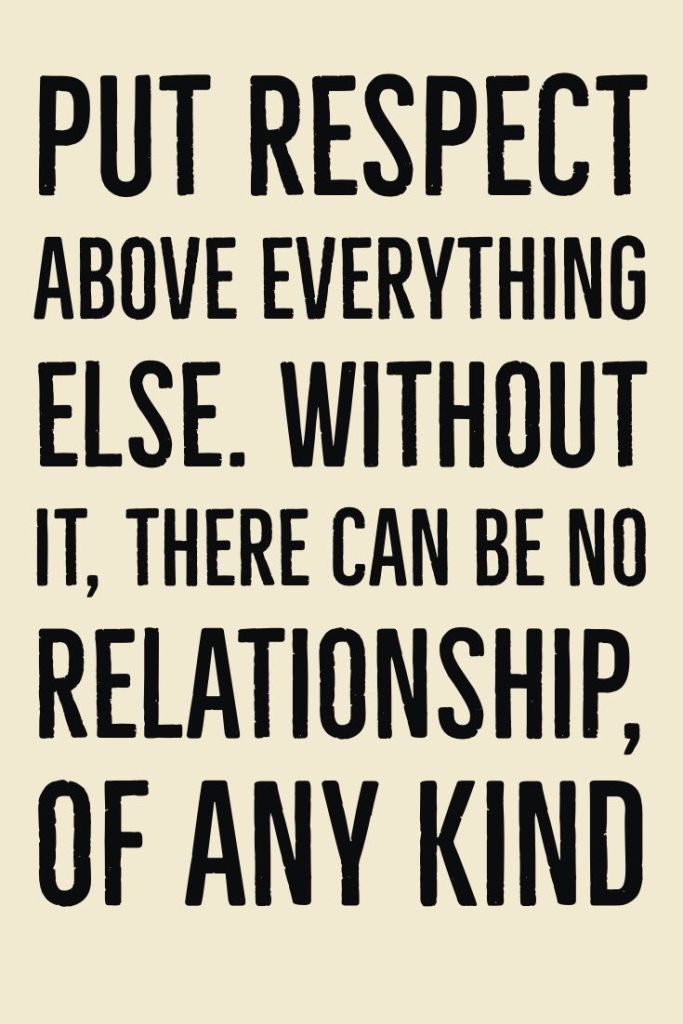
Any child you fail to connect with will never buy what you’re selling. Nobody remembers a teacher because she taught you the parts of speech or how to multiply double digit numbers. Teachers who are remembered fondly are those who built significant relationships with the learner. When a child is loved and nurtured at home, he comes to school ready to learn and will immediately respect the teacher and can easily build a relationship because he has been taught those skills at home. However, for a child who exists from day to day, worrying about things no child should worry about, speaking a different language, caring for younger siblings, or trying to navigate circumstances far outside of his age or control, the situation looks much different. First acknowledge that you don’t know everything about that hard-to-love child and understand that it is critical that you break through the barriers and find reasons to brag on and encourage him. These children are the reason you answered this calling on your life and the easy-to-love ones are just icing on the cake. Before you can teach anybody anything, you have to build a community that is safe and comfortable for learning. Children don’t need to be embarrassed or accused or criticized. They need someone to teach them the things no one has already taught them. Just because someone’s mama tried to teach them manners, doesn’t mean the manners will be displayed. Teaching is about building a relationship with a learner that is full of practicing what we have been taught until it becomes automatic.
Remember that the PEC student who is placed in your Inclusion class has had to fail repeatedly to arrive there. Oftentimes in public schools, it can take 6-9 months for a student to meet the specific eligibility to qualify for the PEC support he/she needs, after the initial paperwork has begun. Their parents have been on this journey with them, and are probably just as frustrated and anxious as their child. They had no idea that school was going to be such a challenge, such a struggle, such a disappointment for their child.
I’ll never forget a little fellow named Eddie, who showed up at my door one morning with his Mom and his 2nd grade teacher. I had a SpEd Resource Room at that time and served students K-6th grade. That morning I had a 5th grader working on Reading, a 3rd grader working on Math, and a 4th grade Behavior Disorder (BD) student working on social skills as well as reading. Eddie walked in, hair sticking up here and there, shorts too tight and shirt too short. He walked up to each student in the room, tapped them on the arm and asked…” Is this the classroom where you learn to read?”
You see, Eddie had been in school for 3 years and he still could not read. He wanted to be able to read and he wanted to be sure that he was in the right room where that would happen. All of the students told him, “ Yes, this is the room.” He then turned to me and asked me where his desk was. He sat down and we got to work.
Relationship is another word for trust, love, and safety.
(Pamela Webster, M. Ed, SPED.)
Experienced teachers- if you have a story that supports this topic, please add it in the comments below.


-
Subscribe
Subscribed
Have a WordPress.com account? Log in now.

